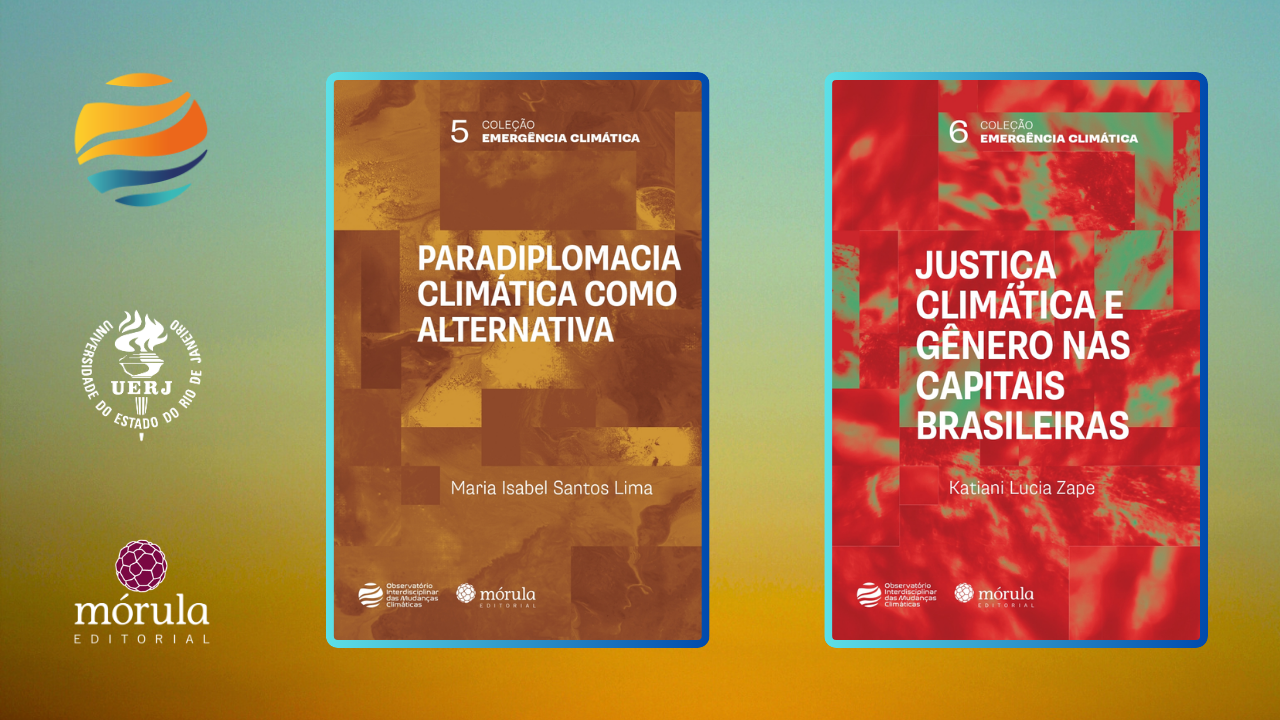
The Interdisciplinary Observatory on Climate Change is releasing the two most recent volumes in the Climate Emergency Collection. In its fifth and sixth installments, the series presents the books Climate Paradiplomacy as an Alternative, written by OIMC researcher Maria Isabel Santos Lima (IESP-UERJ), and Climate Justice and Gender in Brazilian State Capitals, written by Katiani Lucia Zape (LABMUNDO and UniJorge). Developed in partnership with Mórula Editorial, this collection aims to promote a research agenda focused on understanding climate change from the perspective of the social sciences and humanities, fostering dialogue between social and political actors, mobilising different generations, and disseminating proposals for debate within universities, governments and civil society.
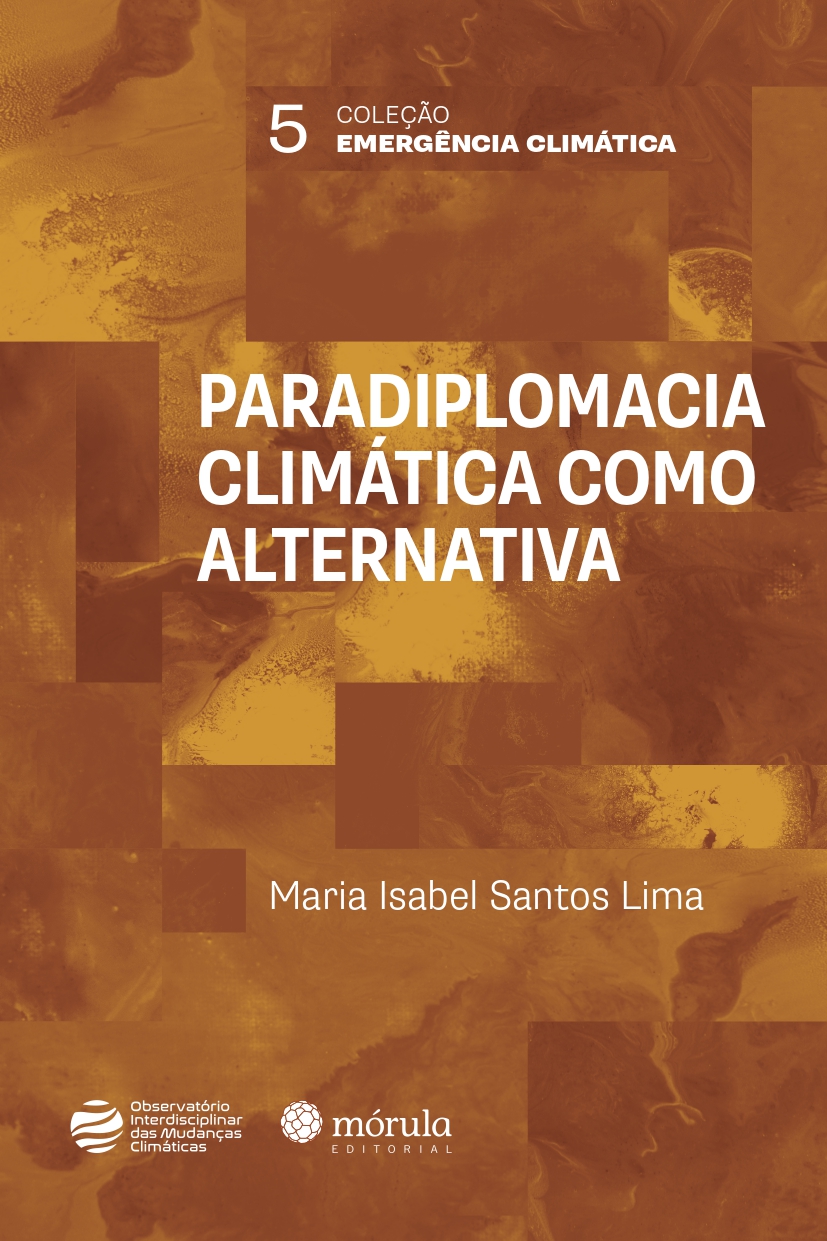
Based on the author’s doctoral thesis, defended under the supervision of Prof. Carlos R. S. Milani in 2025, within the Graduate Programme in Political Science at IESP-UERJ, Climate Paradiplomacy as an Alternative analyses the cases of the United States and Brazil in the context of federal governments that deny climate change, with the aim of examining the role of sub-national governments – governors and mayors – on the international stage as they seek an active voice in the agenda to combat the effects of the climate emergency. Spanning five chapters, the book addresses the evolution of climate denial, the fundamentals of paradiplomacy and the mobilisation strategies of local and regional governments, with the aim of demonstrating how the international actions of these governments can represent an alternative to federal inaction, contributing to multilevel climate governance and to the continuation of efforts to tackle climate change.
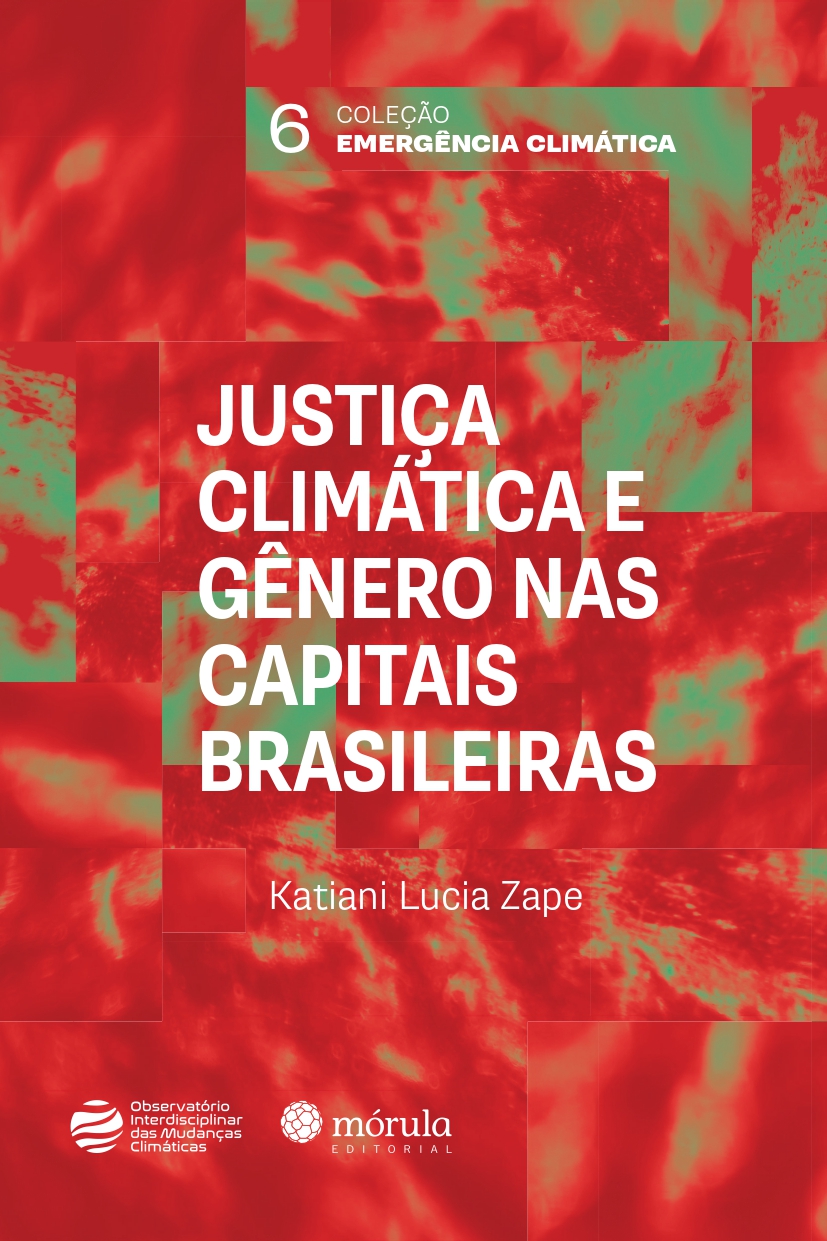
The volume Climate Justice and Gender in Brazilian State Capitals examines the links between climate change, gender inequalities and urban dynamics, highlighting how the impacts of the climate crisis affect the populations and territories of Brazilian state capitals in unequal ways. From the perspective of climate justice, the book demonstrates that factors such as gender, race and income influence exposure to environmental risks, conditions for adaptation and participation in decision-making processes. The author challenges the supposed neutrality of urban planning and highlights how climate policies that ignore historical inequalities can reproduce and exacerbate vulnerabilities, particularly amongst women. As a key contribution, the book presents the Gender and Equity Ranking in Climate Governance, a methodological tool developed to assess the extent to which state capitals incorporate a gender perspective into their climate policies, identifying progress, gaps and institutional inequalities.
Co-edited by Professors José Maurício Domingues and Carlos Milani, the Climate Emergency Series also comprises four further volumes, published by Mórula in 2024 and 2025.